
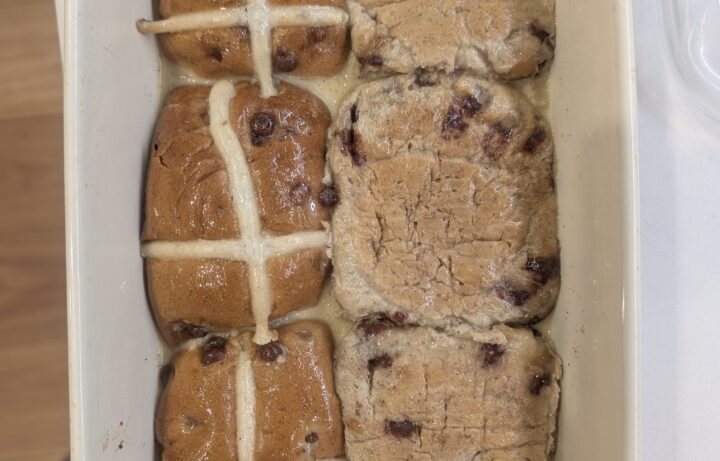
Easter buns getting an Easter inspired soak
FRENCH TOAST
French toast is one of those recipes that sounds simple but is easy to get wrong — until you know the secrets. Thick slices, a rich custard soak, and a patient hand at the stove are all it takes to turn a humble loaf into something genuinely special. This version is golden, custardy in the middle, and just sweet enough to need nothing more than a drizzle of maple syrup and a dollop of cream alongside, but some berries or fruit compote really raise the bar.
Ingredients
- 2 thick slices white bread (about 2.5–3 cm thick)
- 2 eggs
- 60 ml full-cream milk
- 40 ml thickened cream
- 1 tsp vanilla extract
- 1 tbsp caster sugar
- Pinch of salt
- ½ tsp ground cinnamon (optional)
- 30 g unsalted butter, for frying
- Maple syrup, betties and icing sugar, to serve
Method
- Slice your bread to about 2.5–3 cm thick — this is what gives French toast its custardy centre rather than a thin, eggy result.
- In a wide, shallow bowl, whisk together the eggs, milk, cream, vanilla, caster sugar, salt, and cinnamon (if using) until well combined. Make sure that all the bread is going to fit in the dish at one time.
- Place two slices of bread into the custard and allow them to soak for at least 5–10 minutes per side — longer if your bread is very thick or very fresh. The bread should feel heavy and fully saturated before it goes anywhere near the pan. If you have time, soaking overnight in the fridge in a covered dish gives exceptional results.
- Heat a large frying pan over medium-low heat — on induction, around level 4 to 5. Add half the butter and let it foam and subside before adding the bread. The butter should melt gently, not spit.
- Cook the soaked slices for 4–5 minutes per side, until deeply golden and the custard is set through. If your slices are very thick, cover the pan loosely with a lid for the first 2 minutes to help the heat penetrate to the centre without burning the outside. Low and slow is the key here.
- Transfer to a warm plate.
- Dust with icing sugar and serve immediately with maple syrup, or see the serving suggestions below for ideas.
Notes
Bread thickness matters more than anything. Thin sandwich slices go soggy and cook too fast. 2.5 cm is the minimum; 3 cm is ideal. Day-old bread that’s slightly dried out actually absorbs the custard better than very fresh bread.
Try hot cross buns. Add a pinch of ground cloves, a grind of nutmeg a dash of allspice and the cinnamon to the soak. Leave for enough time to really saturate the halved buns then cook as normal. Serve with honey and cream cheese or ricotta.
Cream is the upgrade. You can use all milk (about 125 ml total) if that’s what you have, but the combination of milk and cream gives a noticeably richer result.
Don’t skip the soak — and don’t rush it. For slices 2.5–3 cm thick, budget at least 5–10 minutes per side. Even then, very fresh, dense bread may need longer. If you have time, soaking overnight in the fridge in a covered dish gives exceptional results.
Watch your heat. On induction especially, medium heat can be too aggressive for thick slices — level 4 to 5 is more forgiving. If the outside is browning before the centre is set, your heat is too high. A loose lid for the first couple of minutes can help the custard cook through evenly.
Serving suggestions: Maple syrup is the classic, but our favourite is a spoonful of rhubarb Rhubarb compote and a dollop of cream — the tartness cuts beautifully through the rich custard. Greek yoghurt or crème fraîche works just as well if you want something a little lighter. For a savoury version, omit the sugar and cinnamon and serve with crispy bacon and a fried egg.
Leftovers: French toast is best fresh, but leftover cooked slices can be reheated in a 160°C oven for 8–10 minutes and come back to life well.