
This is the margarita version of a tangelo infusion — just clean citrus so it works as a proper Cointreau substitute rather than competing with the tequila. Blood orange zest adds colour and a berry-wine complexity, Valencia brings the classic bright orange backbone, and a touch of Ruby grapefruit supplies genuine bitterness — provides that flavour that real Cointreau gets from bitter orange peel. Four citrus doing the work and no added spice.
TANGELO CITRUS COINTREAU
Ingredients
- Thinly peeled zest from approximately 8–9 well-washed tangelos (about 130g total)
- Thinly peeled zest from 2–3 well-washed blood oranges (about 20g total)
- Thinly peeled zest from 1–2 well-washed Valencia oranges (about 20–25g total)
- Thinly peeled zest from ½ a well-washed Ruby grapefruit (about 10–15g total)
- 500g white sugar
- 1500ml mid-range vodka (Smirnoff, Titos, or Absolut level — avoid bottom-shelf, no need to go premium)
- One 2-litre jar with tight-fitting, airtight lid
Method
- Peel the zest thinly from 8–9 tangelos, avoiding the white pith, to give about 130g zest.
- Peel the zest thinly from 2–3 blood oranges the same way, avoiding pith, to give about 20g zest.
- Peel the zest thinly from 1–2 Valencia oranges the same way, avoiding pith, to give about 20–25g zest.
- Peel the zest thinly from ½ a Ruby grapefruit the same way, avoiding pith, to give about 10–15g zest.
- Put the initial batch of tangelo, blood orange, Valencia and grapefruit zest into the 2-litre jar along with the 500g white sugar.
- Seal and macerate for 48 hours, shaking and turning the jar regularly — the sugar draws the juice and oils out of the zest by osmosis. This forms a syrup before the vodka goes in.
- After 48 hours, add whatever quantity of mid-range vodka fits into the jar.
- Seal tightly, or cover the top with plastic wrap under the lid to stop evaporation.
- Store away from direct sunlight, somewhere you’ll see it regularly.
- For the next 14 days, turn the jar over and back several times daily to help fully dissolve any remaining sugar.
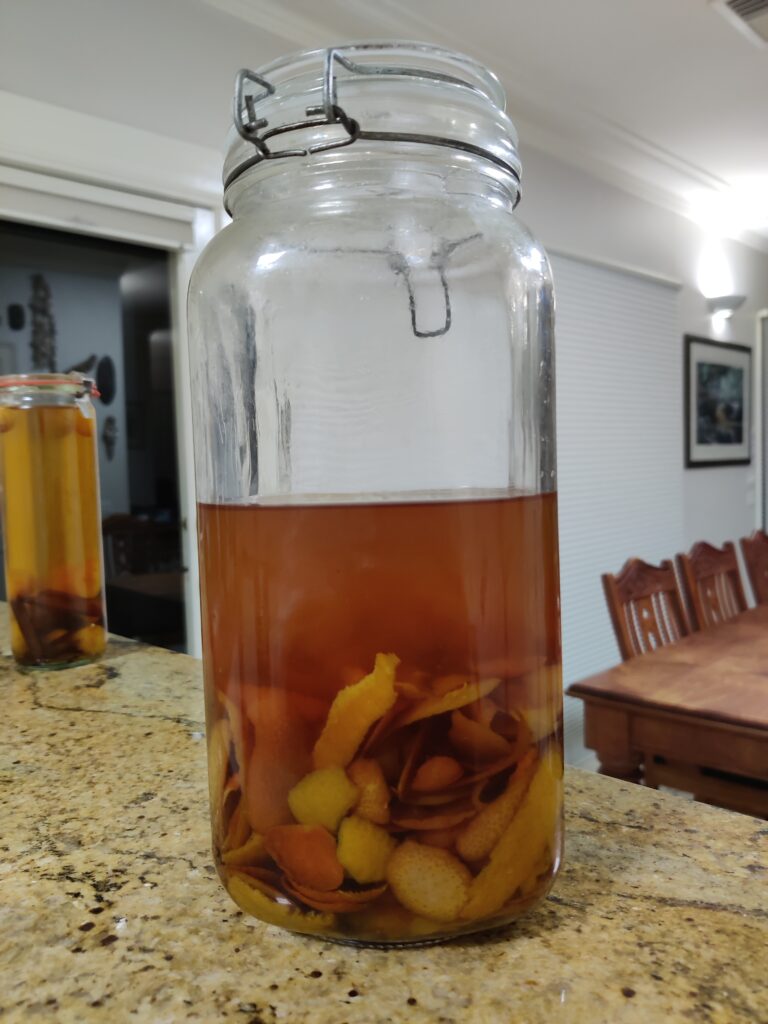
- Leave the jar for 30–60 days total, continuing to turn it regularly, until the peel turns pale/white, signalling the flavour has been fully extracted.
- Strain through a fine sieve into a jug, pressing lightly to extract the liquid, then discard the zest.
- Bottle the strained liqueur into a clean bottle, label with the date, and seal.
- Rest for at least three months before using — it smooths out considerably with age.
Notes
Macerating the zest in sugar for 48 hours before adding the vodka is a faster, more thorough way to extract flavour than adding everything at once — the sugar pulls juice and oil out of the peel by osmosis first, so the vodka isn’t left to dissolve solid sugar cold. There are no spices at all in this by design four citrus varieties bring enough complexity between them, Mid-range vodka (Smirnoff, Absolut) is the right call here — bottom-shelf vodka can leave a harsh, fusel edge that survives the infusion, while premium vodka’s subtlety just gets buried under the sugar and citrus oil anyway. Use as a 1:1 substitute for Cointreau or triple sec in a margarita.
When life doesn’t bring you kumquats