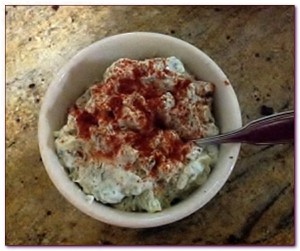
A good tzatziki is more than yoghurt and cucumber stirred together. The cucumber needs to be salted and squeezed hard, the garlic tamed in vinegar before it goes in, and the yoghurt properly thick, or you end up with a watery bowl by the time it reaches the table. It goes with almost anything off the barbecue, and with a few swaps it becomes a raita for an Indian spread.
These use homemade yoghurt that has been strained to remove excess liquid and are made the day before so the flavours have time to meld properly. Both are cooling, bright, and go with almost everything on a Middle Eastern or Indian spread.
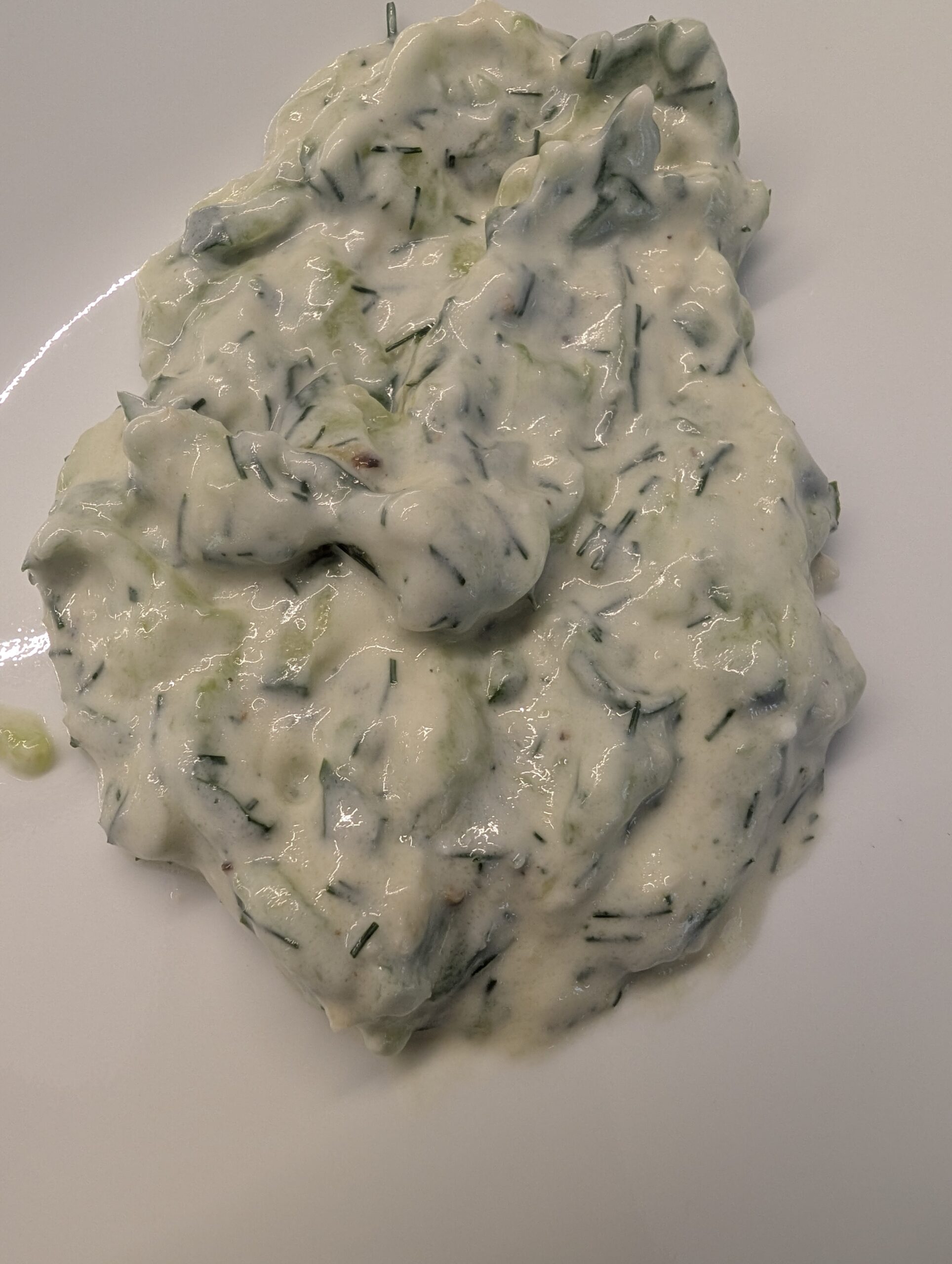
TZATZIKI
Makes about 550g
Ingredients
- 400g strained yoghurt, full fat (see Labneh and strained yoghurt)
- 200g continental or Lebanese cucumber (about 1 small continental or 2 Lebanese), unpeeled, or whatever quantity you have, just adjust the other ingredients.
- 2 medium garlic cloves (6–10g), peeled or minced if that’s what you have.
- 2 tsp red wine vinegar
- 20g extra virgin olive oil, plus extra to serve
- 1½ tbsp finely chopped fresh dill (a small handful)
- 1 tbsp finely chopped fresh mint (optional)
- ¾ tsp fine sea salt, divided
- Freshly ground black pepper
Method
- Coarsely grate the 200g cucumber on the large holes of a box grater. There is no need to seed continental or Lebanese cucumbers. Toss with ½ tsp of the salt and leave in a sieve over a bowl for 10 minutes to draw out the water.
- While the cucumber sits, make the garlic paste. Finely grate the 2 garlic cloves on a microplane (or pound in a mortar) with the remaining ¼ tsp salt and a good grind of pepper, working it into a smooth paste. Stir in the 2 tsp red wine vinegar and leave for a few minutes to take the edge off the raw garlic, then whisk in the 20g olive oil until creamy.
- Tip the cucumber into a clean tea towel or muslin, twist and squeeze as hard as you can until no more water drips out. The drier the cucumber, the thicker the tzatziki.
- Put the 400g strained yoghurt in a bowl and stir through the garlic paste until smooth. Fold in the squeezed cucumber, the 1½ tbsp dill and the 1 tbsp mint if using.
- Taste and adjust the salt.
- Cover and refrigerate for at least 1 hour before serving; overnight is better as the flavours settle and meld.
- To serve, spoon into a bowl and finish with a drizzle of olive oil.
RAITA (Variation)
Make as above with these swaps:
Leave out the garlic, or use just ½ a small clove.
Replace the red wine vinegar with 1 tbsp lemon juice, or leave the acid out.
Leave out the olive oil.
Replace the dill with 2 tbsp finely chopped mint and 1 tbsp finely chopped coriander.
Stir in 1 tsp cumin seeds, dry-toasted until fragrant and lightly ground.
Finish with a pinch of cayenne or Kashmiri chilli on top.
Notes
Strained yoghurt: The yoghurt must be thick before you start — homemade yoghurt has much more whey than commercial Greek yoghurt and will go runny if not strained. If yours isn’t already strained, see Labneh and strained yoghurt for the quick method.
Fennel instead of dill (marathotzatziki): On Crete and the Aegean islands, wild fennel often replaces dill. Use the same amount of soft, feathery fennel fronds, chopped by hand and folded in at the end. For a little sweet crunch, finely grate 1 tbsp of fennel bulb and squeeze it dry along with the cucumber.
Toum: Lebanese garlic paste can replace the fresh garlic — use 1 tsp, stir it straight into the yoghurt with the vinegar and oil, and taste before adding more as it is strong.
Capers: Not traditional, but 1 tbsp roughly chopped capers adds a briny depth that works well with rich meats like brisket or lamb.
Za’atar: A generous pinch on top with the olive oil is a good Levantine-style finish.
Pickled cucumber: Pickled cucumber (not gherkins) can replace fresh — Chop finely and squeeze dry. Go easy on the salt. The result is a tangier tzatziki with a fermented note.
Storage: Keeps covered in the fridge for 3–4 days. A little liquid may collect on top — pour it off and stir before serving..