
After a few rounds of testing, this Korean pancake gets a proper update — more plain flour and less starch for a batter that holds together instead of crumbling, and ice-cold soda water in place of plain water for a genuinely crisp edge. The breakthrough was realising the batter isn’t the point — it’s just glue holding the vegetables together, and the thinner you spread it the better it gets. Matsogeum (Korean seasoned salt) adds a savoury depth the original mix was missing.
Cooked in a big pan with plenty of oil and finished with a tangy soy dipping sauce, it makes a generous light meal for four or a simple side or bar snack.
Same bulk-mix approach as before: make up a double batch of the dry ingredients, keep it in an airtight container, and mix a portion fresh whenever you want pancakes. For a quick meal it is fiddly to get all the ingredients for the basic mix out, but put together a container full of the flour mix and you have a quick meal or bar snack. This mix goes on holidays in our motorhome and is great for a no fuss meal, just use half cup of the mix and 2 cups of finely sliced vegetables and that is enough for 2.
Traditionally it is made with a lot of garlic chives, which I grow near the back door. I just snip a pile off, just above the base of the plant, wash, clean out the scraggly stems then chop into 1/3, but any vegetables that are in the fridge are contenders, as long as they are sliced finely enough to cook in the batter.

KOREAN PANCAKE
Ingredients
- 225g plain flour
- 30g rice flour
- 30g cornflour
- 15g tapioca starch
- 1 tsp Matsogeum (Korean seasoned salt)
- ½ tsp salt
- ½ tsp caster sugar
- ½ tsp garlic powder
- ½ tsp onion powder
- 1½ tsp baking powder, added fresh at cooking time
- 450ml ice-cold soda water
- About 2 cups mixed vegetables, chopped or grated (cabbage, spring onion, carrot, zucchini, or garlic chives cut into 4cm lengths)
- High-heat oil, for frying
Dipping Sauce 1
- ¼ cup light soy sauce, or half & half soy sauce and water
- 1 tbsp rice vinegar
- 2 tsp sesame oil
- 1 tsp caster sugar
- 2 tsp Chinese cooking wine
- 2 tbsp spring onion, finely sliced
- 1½ tsp toasted sesame seeds (optional)
- 1 tsp gochugaru (optional)

Method
This entire batch makes about 5 pancakes. I use enough of the mix for one – about 1/2 cup and make more as they get eaten.
- Make the dipping sauce first so the flavours settle. Combine ¼ cup light soy sauce, or half & half soy sauce and water with 1 tbsp rice vinegar, 2 tsp sesame oil, 1 tsp caster sugar, 2 tsp Chinese cooking wine, 2 tbs sliced spring onion, 1½ tsp toasted sesame seeds, and 1 tsp gochugaru if using, and set aside.
- Whisk together 225g plain flour, 30g rice flour, 30g cornflour, 15g tapioca starch, 1 tsp Matsogeum, ½ tsp salt, ½ tsp caster sugar, ½ tsp garlic powder and ½ tsp onion powder. Store the portion that isn’t used today in an airtight container.
- When ready to cook, measure out 1/2 cup of the flour mix and whisk in 1½ tsp baking powder (added fresh, not stored in the mix) and enough ice-cold soda water until you have a smooth, runny, pourable batter.
- Stir through about 1 cup of the finely sliced or grated vegetables.
- Heat a 25cm cast iron skillet to medium high temperature, too hot and you get burnt patches, we are looking for an even golden colour, and add a generous amount of high-heat oil.
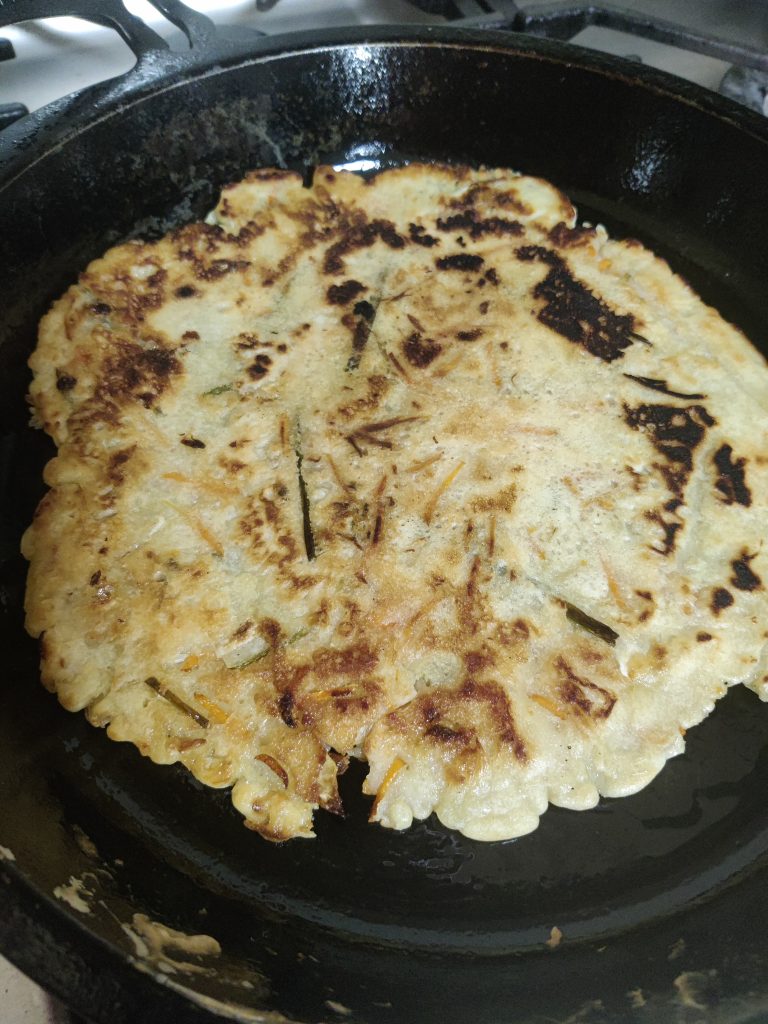
- Pour in the batter mix and spread as thinly as it will physically go. The vegetables should lie in a single layer with the batter just filling the gaps between them — that’s as thin as it gets. Don’t spread it all the way to the sides of the pan; leaving it short of the edges lets the batter run out thin and gives you lacy, crisp edges. Cook until the base is golden and crisp. Once the surface is set you can push down to improve contact with the surface.
- Spray the pancake with oil and flip it. Press down again and cook until the second side is golden. A smash burger press makes this easy. Be patient — these take longer to cook than you’d expect, and rushing the heat gives you charred spots with a raw centre.
- Slide on to a board and cut into squares.
- Serve hot with the dipping sauce on the side.
- If you are using all the flour repeat with the remaining batter — you’ll get about five pancakes.
Notes
The ingredients are pretty forgiving, if you don’t have something just substitute, some of these recipes are almost only self raising flour, this is closest to a gourmet, restaurant style — add what you want but taste the batter before cooking and adjust, then note down what you actually used so it is repeatable for you.
Soda water is doing real work here for crispness; but you can swap it for ice cold plain water. Cold matters more than the bubbles.
This recipe makes enough batter for 4–5 pancakes, depending on size — a reasonable lunch for two or three.
Thinness is everything. A thick pancake has a doughy centre and tastes flat no matter how well seasoned the batter is. If it doesn’t spread easily, add another 30–50ml of water.
A smash burger press is the ideal tool here — it applies even pressure across the whole surface where a spatula pushes from one edge.
Any single starch at 75g works if you don’t want three in the cupboard. Cornflour alone gives the crispest result.
Chop, slice or grate any green or hard vegetables, that are in the fridge but not things that are watery like cucumber or tomato. I typically use a lot of cabbage, with spring onions, or carrots. About 2 cups for one pancake. The vegetables shrink a fair bit and this is about 1/2 cm thick.
Don’t pre-wilt the cabbage. Shredded raw, it softens and sweetens in the pan without watering down the batter.