
Why buy dukkah in tiny jars when it’s this easy to make? This is a revisit of my old recipe. It’s now built on hazelnuts, as dukkah traditionally is, and the batch is smaller so it gets eaten while it’s fresh. As usual the spices are toasted whole and ground by hand, which gives far more flavour than spices from a jar. The nuts are now roasted together on one tray in the oven, so there’s no standing over a frypan.
Dip good bread in good olive oil, then in the dukkah, and you won’t stop.
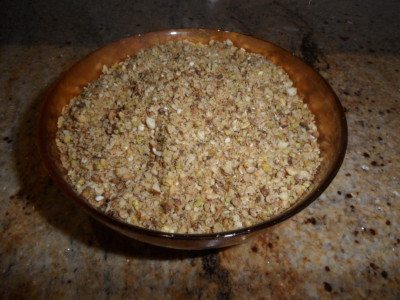
So easy to make and much cheaper than the bought stuff
DUKKAH
Makes about 1¼ cups
Ingredients
Spices
- 1 tbsp coriander seeds
- 1½ tsp cumin seeds
- 1½ tsp fennel seeds
- ½ tsp black peppercorns
- ⅛ tsp dried chilli flakes (optional)
- ½ tsp salt, plus more to taste
Nuts and seeds
- 70g hazelnuts, skinless, if already roasted don’t do them as long(see notes if yours have skins)
- 25g almonds, blanched or skin-on
- 35g pistachio kernels, unsalted
- 25g white sesame seeds
Method
-
- Preheat the oven to 160°C fan-forced.
- Put the 1 tbsp coriander seeds, 1½ tsp cumin seeds, 1½ tsp fennel seeds and ½ tsp peppercorns in a dry frypan over medium heat. Toast them, shaking the pan, until they smell fragrant and are just starting to colour, about 2–3 minutes. Tip them into a bowl to cool.
- Note whether nuts are roasted. You may have to reduce or increase the time to suit. Spread the 70g hazelnuts (check whether your skinless hazelnuts are already roasted, don’t roast them again) and 25g almonds on a baking tray and roast for 3 minutes. If your hazelnuts are already roasted and skinned, add them at the next step.
- Add the 35g pistachios to the tray, shake it to spread them out, and roast for another 5 minutes.
- Scatter the 25g sesame seeds over the tray, shake again and roast for a final 3 minutes, until the sesame is light golden. Leave everything to cool on the tray for at least 15 minutes. If the nuts are still warm when you grind them, they turn oily.
- Grind the cooled spices in a mortar and pestle until fairly fine, with no whole seeds left but not reduced to powder. Stir in the ⅛ tsp chilli flakes (if using) and the ½ tsp salt.
- Pulse the cooled nuts and sesame in a food processor in short bursts until they’re a coarse crumb, a bit bigger than breadcrumbs, with some chunkier bits. Stop before it starts clumping. Over-processing heads towards nut butter. A spice grinder or blender tends to give you either powder or big chunks, so use a food processor or a mortar and pestle.
- Mix the nuts and spices together. Taste, then adjust the salt and spices. If it’s too spicy, add more nuts.
Notes
Skinning hazelnuts: The skins are bitter, so buy skinless if you can. Skinless may be already roasted, only roast them again lightly. If yours have skins, roast them on their own at 160°C fan-forced for 10–12 minutes, until the skins crack. Tip them into a tea towel while they’re still hot and rub them hard. Most of the skin will come off, and a few flecks left on are fine. Because these are already roasted, don’t roast them again. Add them to the processor with the other nuts.
Almonds: Blanched almonds give a cleaner look, but skin-on is fine. Give raw skin-on almonds the full 3-minute head start.
Swaps: Hazelnuts are the base. If you’re using up odds and ends of almonds, pistachios, macadamias or cashews, that’s fine. Use unsalted nuts, or the salt will be out of balance.
Storage: Keep in an airtight container. It lasts about 2 weeks in a cool pantry, 2 months in the fridge or 6 months in the freezer. Start with fresh nuts and spices, because stale ones only get worse.
Christmas: A jar of dukkah with a bottle of good olive oil makes an easy food gift, and it keeps well enough to make a few weeks ahead. On the Christmas table, put out a bowl of it next to oil and torn bread for grazing.
Ways to use it: The classic is bread dipped in olive oil and then in dukkah. Brush flatbread with oil and scatter dukkah over it before warming. Sprinkle it over roast vegetables, eggs, avocado toast, labneh, hummus or whipped feta. Use it as a crust for fish, particularly for salmon, or chicken, or mix it with breadcrumbs for a crumb coating. For long bakes, add it at the end, because the nuts burn.
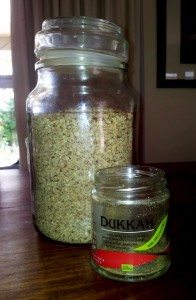
Compare the quantity of home-made to the commercial jar