
This recipe was given to the world by Warburtons, a major crumpet maker in the UK, during Covid. They are so easy and taste so good, but you really need to allow at least 2 hours, start to finish. There’s not much hands on time, just a lot of waiting. It would be best to make these in an afternoon, early in the week and then, with 10 of them, you have a crumpet for breakfast for the next few days.
CAST IRON CRUMPETS
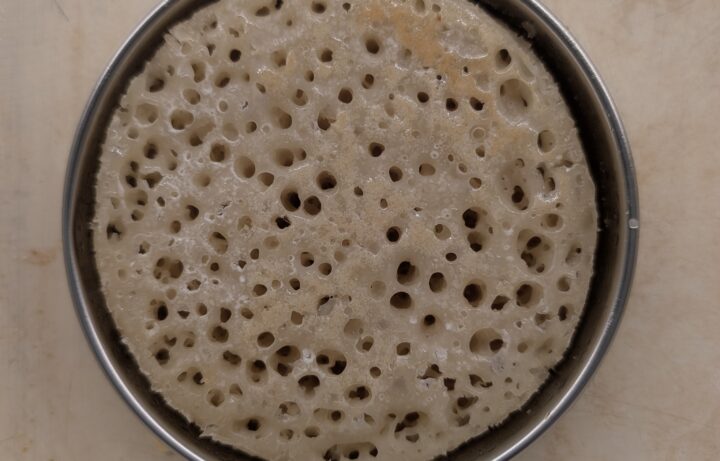
These big, bold 10cm crumpets are engineered for efficiency when cooking in batches. A simple yeast and baking powder dough gets a warm proof, then cooks in a cast iron baking dish over two induction elements to give you golden, hole-filled crumpets with a tender crumb. Once you dial in your heat, you can cook 5 at a time—twice through the dish—for a full batch of 10. This recipe makes 10 x 70g (10 cm ring) crumpets.
Ingredients
- 300g plain white flour
- 400ml warm water
- 1 tsp salt
- 1 tsp sugar
- 2 tsp baking powder
- 2 tsp dried yeast
- Butter for greasing rings and dish
Method
Batter Preparation
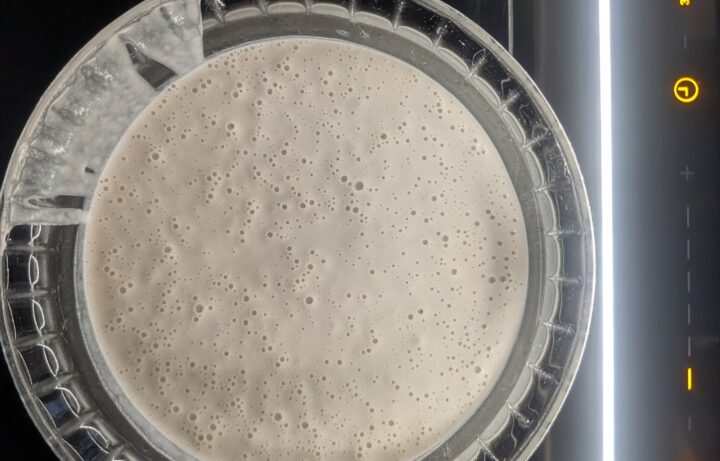
Rest, covered in a warm place until risen and bubbly
- Add flour, water and salt to the mixer bowl and whisk for 3 minutes on medium speed.
- Meanwhile dissolve yeast into 2 tbsp warm water in a small bowl.
- Add sugar, baking powder and yeast mixture into the mixing bowl, then whisk for a further 30 seconds.
- Transfer to a bowl that fits in the warming drawer. Cover and place in the warming drawer on Heat 2 for about 30 minutes. The surface will get foamy and increase in volume by 15%.You could just leave it in a warm spot in the kitche
- Let it get quite bubbly.
Cooking
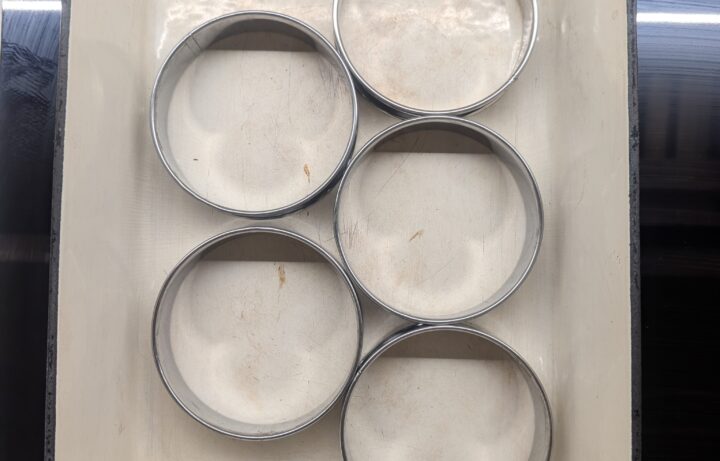
- Grease your 10cm crumpet rings with butter on both the inside and top and bottom edges.
- Place the cast iron baking dish on the two induction elements set to medium-high heat. Lightly oil or butter the base of the dish.
- Arrange the 5 buttered crumpet rings in the cast iron dish in a stable configuration (even spacing) and pre-heat together for about 3 minutes until the dish and rings are hot to touch. You need good starting heat to activate the bubbles.
- Give the batter a quick stir to remove any large air bubbles.
- Ladle 70g batter into each ring—it will come to a depth of about 8mm and will rise during cooking. This is barely half full.
- After 1½ minutes, bubbles should start appearing on the surface. Lower the heat to medium and wait for a further 4 minutes or until the tops set.
- Use a fine skewer or toothpick to pop any unpopped bubbles sitting near the surface.
- Carefully lift off the crumpet ring from each crumpet. If any batter sticks, gently push it back into shape.
- Flip each crumpet over for 15–20 seconds to lightly set the top.
- Transfer to a cooling rack.
- Once the first batch of 5 is done and cooling, wipe the dish clean, re-grease the rings, and repeat with the remaining batter for your second batch of 5.
Notes
Batter thickness: At 70g per ring, you’ll get a crumpet about 9mm thick that rises to roughly 1.5cm—the classic crumpet depth. If you prefer thinner crumpets, reduce to 65g per ring; if you like them more substantial, go up to 75g.
Cast iron heat retention: The heavy dish will retain a lot of heat between batches. You may need to lower your heat slightly for the second batch, or let the dish cool for 30 seconds between batches. Watch the first crumpet in batch 2 closely to dial in timing.
Ring arrangement: Make sure your 5 rings are spaced evenly in the dish so heat circulates underneath and around all of them equally. A circular arrangement usually works best if it’s a round pan but is use a rectangular baking dish. It fits 5 neatly.
Storage: These will keep in the fridge for about 4 days, or freeze well. Defrost slowly at room temperature before toasting. Toast and serve with butter, golden syrup, honey, or your favourite topping.